

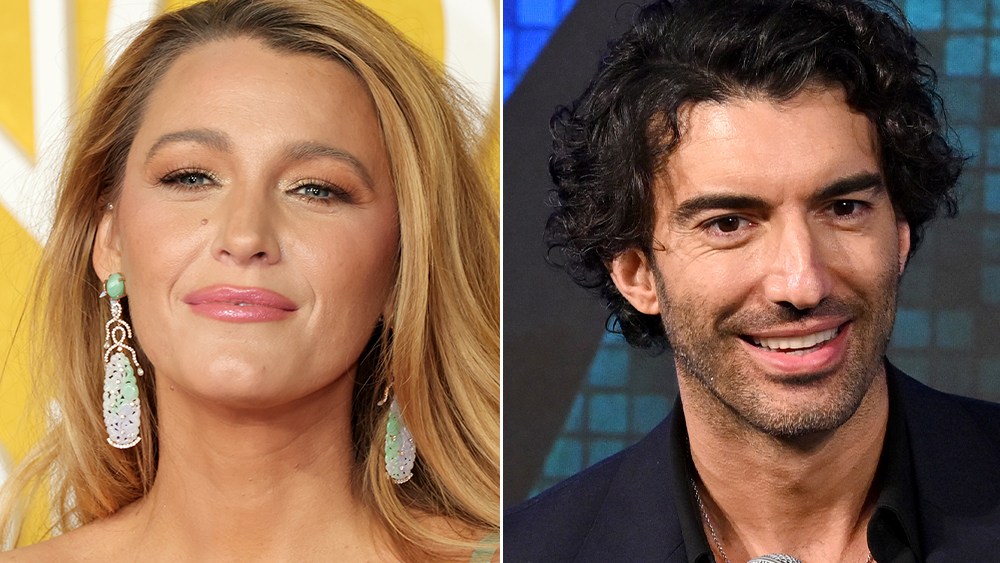
The scene is a busy bar. Director Justin Baldoni says co-star Blake Lively is “pretty attractive.” Lively says that wasn’t her goal.
“It’s sexy,” Baldoni says, self-correcting. “Sorry, I missed the sexual harassment training.”
This conversation, recorded on video, could become fodder for a future HR webinar. For now, it’s part of Lively’s larger lawsuit against Baldoni and others involved in “It Ends With Us.”
The case is currently before a federal judge and has become the mother of all celebrity gossip. But it also tests the line between discriminatory behavior and creative freedom, and has the potential to set new standards for acceptable behavior on Hollywood sets.
The last time this issue was thoroughly considered was in 2006, and creative freedom won. The California Supreme Court has dismissed a lawsuit involving graphic sexual conversations in the writers’ room on “Friends.” In this case, Hollywood rallied behind the “Friends” writers, insisting that such speech, no matter how offensive it may seem to outsiders, is essential to the creative process.
Reactions to Ms. Lively’s lawsuit have been further divided, largely along lines of personal loyalty. But in Baldoni’s defense, lawyers cited the “Friends” case law and argued that making a sexual movie involves some level of sexual commentary. Lyle v. Warner Bros. is still around, but the culture has changed a lot since 2006.
“If my lawsuit had happened after the #MeToo movement, I think there might have been a different outcome,” said Amani Lyle, a former writing assistant who filed the lawsuit. “This case was ahead of its time.”
Her lawsuit described conduct that would be unlikely to be tolerated today. Friends writers fantasized about having sex with Jennifer Aniston and Courteney Cox, told stories of receiving oral sex, sketched naked cheerleaders, called women “sluts” and proposed a story in which Joey rapes Rachel in the shower. Lyle, who is black, also claimed that writers, who are white, sometimes indulged in “ghetto talk,” which she found degrading.

“friend”
©NBC/Courtesy of Everett Collection
At the time, the Writers Guild of America said the writers’ room was “not an insurance office” and argued that lawyers and jurors should not be allowed access.
“This not only makes a mockery of the First Amendment, it would effectively mean the end of network television as we know it,” union general counsel Marshall Goldberg said in a court brief co-signed by Norman Lear, Larry David, Stephen Bochco, Diane English and other television legends.
Although the case is remembered as a victory for creative freedom, Lyle argued that much of the action had nothing to do with his work.
“It was really great marketing on the part of Warner Bros.,” she said.
Officially, Warner Bros. had a zero-tolerance policy against harassment. The human resources manager testified that the interpretation is flexible. “We don’t take it too literally…because every workplace is different.”
Wayfarer Studios, which produced “It Ends With Us,” has a similar policy, which strictly prohibits sexual “comments, stories, or innuendos,” as well as sexual comments about someone’s clothing or appearance. As co-chairman of Wayfarer, Mr. Baldoni participated in human resources training sessions where policies were actually discussed.
Ms. Lively’s lawyers argued that Ms. Baldoni violated that policy by talking excessively about her sex life, talking about her addiction to pornography, and forcing her into intimate scenes that she was uncomfortable with. Her breaking point was when Wayfarer CEO Jamie Heath showed her a video of his wife giving birth without telling her.
“I think the behavior I’m describing is clearly sexual harassment,” Lively said in her deposition.
However, company policies exist to protect the company, not to create standards against which the company can be sued. The standard for litigious harassment, set by the Supreme Court 40 years ago, is relatively high.
The misconduct must be “severe or pervasive” enough to change the terms and conditions of employment. The California Supreme Court ruled that Friends’ conduct did not rise to that level. U.S. District Judge Louis Lehman is applying the same test in deciding how much of Lively’s case should go to a jury.
In private messages made public in court filings, Baldoni appears hurt and embarrassed by Lively’s claims, at one point blaming his neurodivergence. “Most of the things I’ve been accused of are social awkwardness and impulsive speaking,” he wrote in a text.
But no matter how righteous an employer may feel, they routinely settle cases that don’t meet the “stringent or broad” standard.
“That’s the culture employers are facing right now,” says Jared Slater, a partner at Irvin Cohen & Jessup. “Employers don’t have the time or money to roll the dice with a judge and jury.”
Mr. Baldoni and Mr. Lively are relatively unusual in that they are willing to pay the costs of proving their complete innocence. Both parties attended court-ordered mediation on Wednesday, but no agreement was reached.
Lyle, on the other hand, left the industry long ago to pursue a career in the U.S. Air Force. She said she saw “It Ends With Us” and liked it.
But she’s not taking sides.
“They have much more influence than me, a woman of color who is very low on the food chain,” Lyle says. “We’ll both be okay in the end.”
