

Alarm bells are once again ringing over the fate of Argentina’s beleaguered film and television organization INCAA. The Argentine government’s draft proposal includes the repeal of key provisions affecting the institute. Currently, these articles guarantee exclusive funding for INCAA, primarily raised from box office receipts.
Although the bill does not formally dissolve INCAA, industry observers have warned that eliminating certain funding sources for INCAA would effectively weaken it by forcing it to rely on general allocations from the national treasury. This could threaten Argentina’s already declining audiovisual sector.
FIPCA, the Ibero-American Film and Audiovisual Production Federation, has submitted a petition to Argentina’s members of Congress asking them to prevent what it calls an “audiovisual blackout” in the country. The Senate is scheduled to consider the new bill on February 11th.
The petition is signed by a wide range of industry leaders from across Ibero-America. Among the more than 800 signatories are Pedro Almodovar, Spanish producer Juan Gordon of Molina Films, Argentine star Adrian Suar, Chile’s Andres Wood (“House of the Spirits”, which premiered at the Berlin Film Festival), and Argentine director Marcos Carnevale (“Heart of the Lion”).
“The future of audiovisual production in Argentina is at a critical juncture. The potential loss of historic sources of funding puts the industry at a crossroads that requires rigor. Audiovisual production is not a decorative activity, but an industry that competes on the world market and in all countries with large production volumes and operates under specific public policies,” FIPCA President Ignacio Rey told Variety.
“In the same bill, there is a provision that repeals three articles of the Cinema Act, in particular the section that provides designated funds to INCAA. That means that the 10% tax on cinema tickets, which has existed for 60 years, and two other sources of funding established in the 1994 law reform, are abolished. This will put INCAA at the mercy of the Ministry of Economy and give it whatever amount it wants, whenever it wants,” Gabriela explained. Sandoval, FIPCA Vice President.

Gabriela Sandoval of Chile, Vice President of Fipca and Co-Founder of Storyboard Media; Courtesy of Fipka
“This change could significantly limit the Institute’s operational capacity and jeopardize the continuity of an industry that creates jobs, exports services, and contributes to high value-added economic activity across the country,” FIPCA said in its petition.
Director Rey gave the example of Brazil, saying: “Before 2019,[Brazilian film and television organization]ANCINE was active, and the field was growing and internationalizing. From 2019 to 2022, the agency’s capital Funds were cut, production was cut back, and dozens of companies closed. Starting in 2023, incentives were reinstated and the industry recovered. The results are visible: Brazil won the Oscar for international feature film in 2025. ” for “I’m Still Here,” and was nominated for five awards this year, including Best International Feature Film and Best Picture for “The Secret Agent.” ”
“Public financing of the audiovisual sector is not an exception in Argentina, but a global standard for film industries around the world. Leading global production countries are combining grants and tax incentives to attract investment, develop talent, and compete in the global content economy,” said Diego F. Ramirez, FIPCA vice president of 64-A Films (“Dog Eat Dog”).
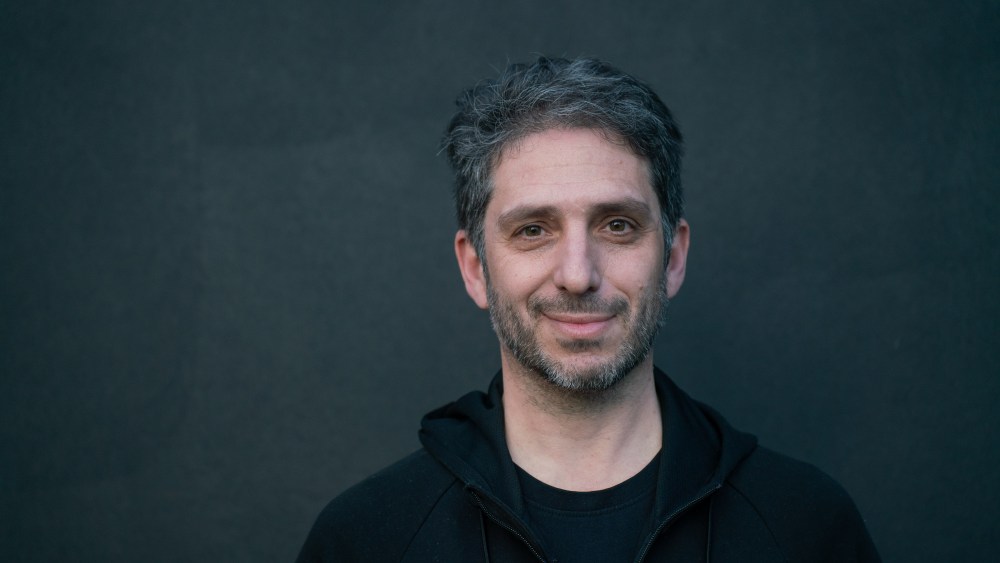
Diego Ramirez, Fipca vice president of 64-A Films in Colombia; Courtesy of Fipka
Since taking power in December 2023, Argentina’s current government has pursued a wide-ranging economic adjustment agenda and delivered on its election promise of deep cuts in public spending. An omnibus bill proposed in January 2024 that would have repealed INCAA failed to pass after massive protests and signatures from some of the world’s most prominent filmmakers. We hope this new petition achieves the same result.
