

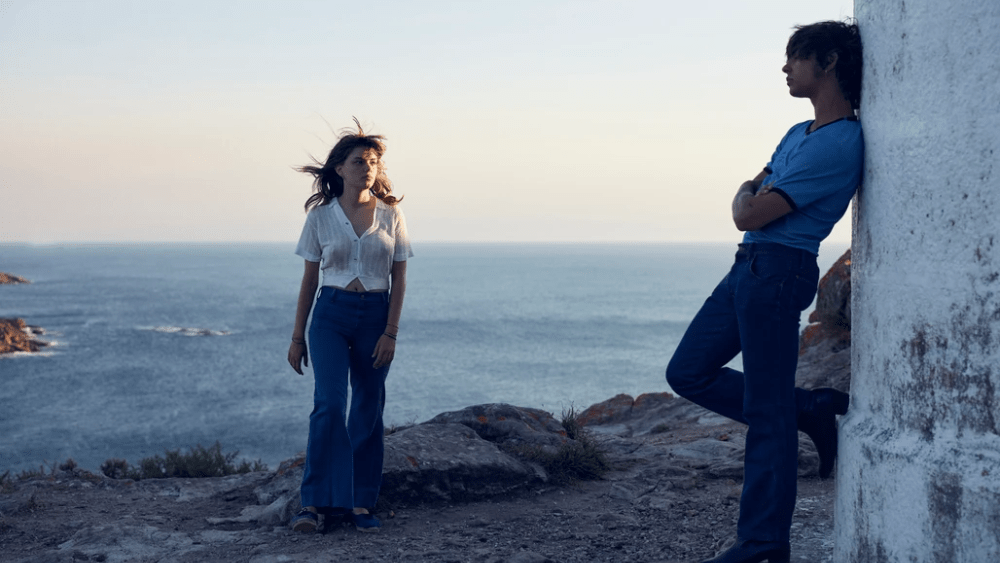
The Costa Rican Film Festival opens next week with a program featuring major festival hits, including Carla Simon’s “Romelia,” Bi Guan’s “Resurrection,” Diego Céspedes’ “The Mysterious Gaze of the Flamingo,” Ulrike Ottinger’s “The Countess of Blood,” starring Isabelle Huppert, and Lucrecia Martel’s “Landmark.” The 14th edition, to be held in San Jose from July 23rd to August 1st, will open with Berlin winner Alan Debarton’s “Gugu’s World.”
Titles selected for the festival’s main competitive division, the Central American and Caribbean Feature Film Competition, include such Costa Rican talent as Hernán Jiménez’s Abril, Kim Torres’ Si no ardemos cómo iluminar la noche, and Weiner Méndez Solano’s Dama de las mil mascaras. The competition will also include films from Cuba, the Dominican Republic, Guatemala, Panama and Puerto Rico, including Vanessa Batista’s “Cuba Street” and Paula Curie’s “Niñas Escallata.”
This year’s festival theme is ‘Films that unite us’, reaffirming the event’s commitment to caring for local communities. Among the program’s novelties is a section dedicated to Afro-Caribbean people, an initiative the festival describes as “a much-needed space for visibility, inclusion, and cross-cultural dialogue with communities of African descent, whose stories and perspectives deeply enrich our cinematic world.”
CRFF continues its mission to champion women filmmakers, a fitting tribute given that this Central American country has risen to international fame with a strong generation of female filmmakers, including Valentina Maurel, Sofia Quiroz, Antonella Sudasassi and Hilda Hidalgo. On July 26, the festival will host a conference of women filmmakers from Central America and the Caribbean. The conference aims to “develop a joint strategy against gender discrimination, contribute to narrowing the historically existing gender disparities in the film industry, and foster networks of cooperation and mutual support.”
Advocating for women is the most important mission for festival director Patricia Velázquez Guzmán, who is also a filmmaker herself. Last year was the first time she was at the helm of the event, and also the first time the festival had a female head. Speaking to Variety ahead of the Costa Rican Media Market, Guzmán, who has been enthusiastically received by several young local filmmakers, said her first year at the top has only emphasized her desire to make the festival an inclusive, community-driven event with a strong focus on Central America.
“My priorities remain the same,” she says. “I strive to regionalize the festival as a platform for exchange between Central American and Caribbean filmmakers. Politically speaking, film production is always becoming more difficult. In this region, we are constantly faced with governments that do not prioritize culture, art and cinema. We are constantly faced with governments that do not prioritize culture, art and film. We want to strengthen our network from the industry side to help us complete our films. When financing is difficult, we need networks. And it’s also about giving our films visibility and space. I think that’s always going to be the main point of the festival. ”

courtesy of the wrong man
Asked why Cannes Prize-winning director Valentina Morel’s Mother Animal Forever was not shown at the festival, Guzmán said it was a “disappointment” but that the film was not submitted during the application period. “She was waiting for Cannes. I understand that filmmakers prefer international premieres before returning to Costa Rica.”
But Guzman added that Morel’s film is a testament to a “great moment” in Costa Rican cinema. “Women filmmakers in this country are really standing out. They have been excellent for the last three years and this generation is very strong. This year we are also looking forward to Madre Pajaro by Sofia Quiroz and new releases from Paz Fábrega. We are also at a time when cultural budgets are getting thinner and thinner, so we need to make these films visible as they also focus on the wounds of important issues.”
“These films speak to issues that affect us all,” she added. “Valentina is talking about violence and family, issues that have historically been avoided in places like Costa Rica. We’re seeing movies that talk about sexual abuse and religion, and I think there’s something very valuable about these conversations beyond the aesthetic and artistic value of the work itself.”
This also applies to Andres Madrigal Alvarado’s Lost Men, the festival’s only world premiere in Costa Rica. This sensitive and moving documentary follows the filmmaker as he grapples with his family’s disintegrating secrets to forge a painful parallel between his own queerness and his grandfather’s hidden identity.
Elsewhere in the program, Guzman is particularly excited about the festival’s Generation Alpha section, which is dedicated to films about and starring young people. This year, two Brazilian films will be screened: Alan Debarton’s film festival opening film Goo Goo’s World and Priscilla Kellen’s animated film Papaya, as well as films that have garnered attention in Berlin, including Fernanda Tovar’s Chica Tristes and Jane Yu’s Un Route. Meanwhile, the 13 Years section offers audiences bold genre pieces such as Guto Parente’s Madalena of Death and Life, Bie Gunn’s Resurrection and Ulrike Ottinger’s Bloody Countess.
revival
He Ruiqiong
The “Borders” section, which encompasses films that inhabit social, geographical, and cinematic boundaries, includes IDFA The exhibition will feature Meldad Oskouei’s masterpiece “The Fox Under the Pink Moon”, Cecilia Kang’s “Hijo Mayer”, Berlin’s masterpiece “Pillar of Light” by Seo Jang, Lucrecia Martel’s Venice entry “Landmark”, and Carla Simon’s Cannes competition title. “Romelia”
The retrospective will feature Stanley Kubrick’s “2001: A Space Odyssey”, Ridley Scott’s “Blade Runner” and Steven Spielberg’s “E.T.” in a section called Parallel Universes. This year’s program’s new Atomic Caribbean sidebar will highlight recent work by Afro-Caribbean filmmakers, including Gabriela A. Moses’ Boca Chica, Paloma Gomide’s Si la vida me diera un deseo, and Eleonore Coyette and Sephora Montor’s Tres Hojas.
Below is a complete look at this year’s Costa Rican Film Festival competition section.
Central America and Caribbean Feature Film Competition
Director of “A to Lado”. Cristiano Regina, Cuba
“Avril”, director. Hernan Jimenez, Costa Rica
Director of “Bajo El Mismo Sol”. Ulises Polla, Dominican Republic
Director of “Cuba Street”. Vanessa Batista, Cuba. 2026.
Director of “Comparsa”. Vicki Curtis and Doug Anderson, Guatemala
Director of “Dama de las Mil Mascaras”. Weiner Mendez Solano, Costa Rica
Director of “El Regresado.” Armando Capo, Cuba
Director of “Espina”. Daniel Poehler, Panama
Director of “Esta Isla”. Lorraine Jones and Cristian Carretero, Puerto Rico
Director of “Niñas Escallata”. Paula Curie, Dominican Republic
“Para Vivir, the relentless tiempo of Pablo Milanes” Fabian Pisani, Cuba
“Si no ardemos cómo iluminar la noche”, directed. Kim Torres, Costa Rica
