

A notable change is taking place at the Panama International Film Festival (IFF Panama), which will be held from April 9th to 12th this year. In honor of the richness of documentary filmmaking in the region and beyond, the festival is introducing an international competition for non-fiction works. This is just another step in further expanding its program to an international diversity of voices.
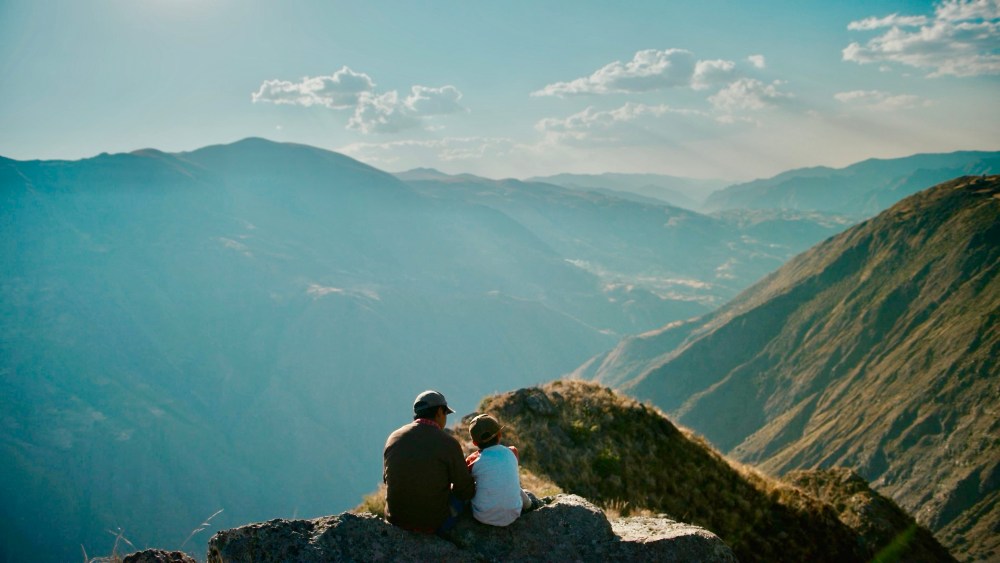
The festival, now in its 14th year, opens with the documentary Runa Simi, directed by Peruvian director Augusto Zegarra. The documentary had its world premiere at Tribeca, where Zegarra won the Albert Maysles Award for Best Documentary Director, and went on to win numerous awards at other film festivals. Leticia Tonos from the Dominican Republic closes the festival with her biomusical “Milly, Queen of Merengue.”
“Luna Simi” follows Fernando Valencia, a radio host from Cusco, who, along with his son Dylan, decides to dub “The Lion King” into Quechua, turning the project into an act of language preservation and powerful father-son bonding. Valencia and her son will attend the opening of the fest, which will be held at the iconic Teatro Nacional.
“We are returning to the National Theater, with great facilities, great acoustics and a big screen,” said Pituca Ortega Heilbron, Chairman of the IFF Panama Foundation Board.
Looking back on the 14 years of the festival, she said: “We are here to stay. Thanks to the strong support we have received from local and international filmmakers, this festival is no longer optional, but essential.”
Screenings of around 40 films from Latin America, Europe, Asia and even Africa will be held this year primarily at the new City of Arts complex opened last year by the country’s Ministry of Culture. “We will be showing films here as well as at the National Theater and the Canal Museum,” said IFF Panama Secretary General Carla Quintero, adding that the festival continues to strive to attract younger audiences. An outdoor screening is planned at the Frank Gehry-designed Biomuseum on the Amador Causeway, which is visited by families.
“The other outdoor venue will be in a suburban neighborhood called San Miguelito, where we will be showing the animated feature ‘Olivia and the Invisible Earthquake,’ a Spanish family film about youth anxiety and how families and neighborhoods work together to counteract it,” she said. Another youth film included in the program is the Thai horror comedy “A Useful Ghost.”
A record seven Panamanian films will be entered in competition thanks to a new initiative to boost film production in the country. Leading the way is Tropical Paradise, Abner Benaim’s (Plaza Cathedral) most personal film to date, a psychological documentary thriller about the 1994 attack on Panama and its lasting impact on survivors, families and communities.
Among the international premieres are director Miguel González’s documentary Saloma, which pays homage to the Panamanian countryside, family memories and rural roots, and Puerto Rican director Ali Manuel Cruz’s drama Sana y Salva. The drama follows a pregnant Dominican immigrant who secretly arrives in Puerto Rico. These titles will be joined by Cannes Un Certain Regard winner Chile’s The Mysterious Gaze of the Flamingo, which will make its Central American debut at the festival.
Graphic artist Mariana Nuñez, a frequent collaborator of the festival, has developed a visual concept that will evolve for next year’s 15th anniversary celebration, a milestone for the festival. The foundation, headed by Ortega-Heilbron, aims to function as a kind of Sundance Institute, nurturing new projects and filmmakers and ultimately contributing to the country’s cultural development.
Guatemala’s Jayro Bustamante returns to the festival with his latest work, Mountains of Fire, which explores indigenous issues. He recently joined Frankenstein star Oscar Isaac and thousands of others from across Ibero-America to champion calls for Guatemala to pass a film law.
Guatemala is participating in a region-wide effort to create a legal framework for the audiovisual industry. FIPCA, the Ibero-American Film and Audiovisual Production Federation, recently pointed to “clear and measurable data” that supports this effort. The report cited the example of the Dominican Republic, where the sector increased the country’s GDP by 0.32% after the implementation of its film law, and said that in Panama, the audiovisual sector forms part of the creative industries, accounting for about 6% of GDP. In Costa Rica, these industries account for approximately 3% of GDP.
IFF Panama’s industry sessions on April 9 will include panels, talks and a masterclass from Argentina’s Manuel Abramovic (‘Pornomelancholia’), winner of the 2019 Berlinale Silver Bear Award for his short story ‘Blue Boy’.
Vice Minister of Culture Arianne Benedetti and Director of the National Cinema Directorate Sheila González will open Industry Day, hosted by Ortega Heilbron, to discuss the country’s role in strengthening Panama’s audiovisual ecosystem and discuss incentives, funding, training and distribution.
Angelica Cervantes, senior director, member and industry insider at the Academy of Motion Picture Arts and Sciences, provides a practical overview of the Academy, from how it works, how to participate, how to submit your film to the Oscars, and from eligibility to review.
Another key highlight is the panel “Cinema in the Time of Cholera,” which explores cinema as a space for memory, resistance, and transformation in times of social and political tension. Puerto Rico’s “Esta Isla” directors Cristian Carretero and Lorraine Jones joined Bustamante and Zegarra in a conversation moderated by David Hernández Palmer to discuss the ethical and creative choices behind their work.
In our conversation, “Inside the Deal,” former MediaPro Studios executive Leslie Cohen speaks with Ortega-Hailbron about how potential projects are identified, deals are negotiated, how films are positioned in the global industry, and provides insight into how these combine with international distribution opportunities.

“Millie, Queen of Meringue”, courtesy of Lineas Espiales Prods.
