

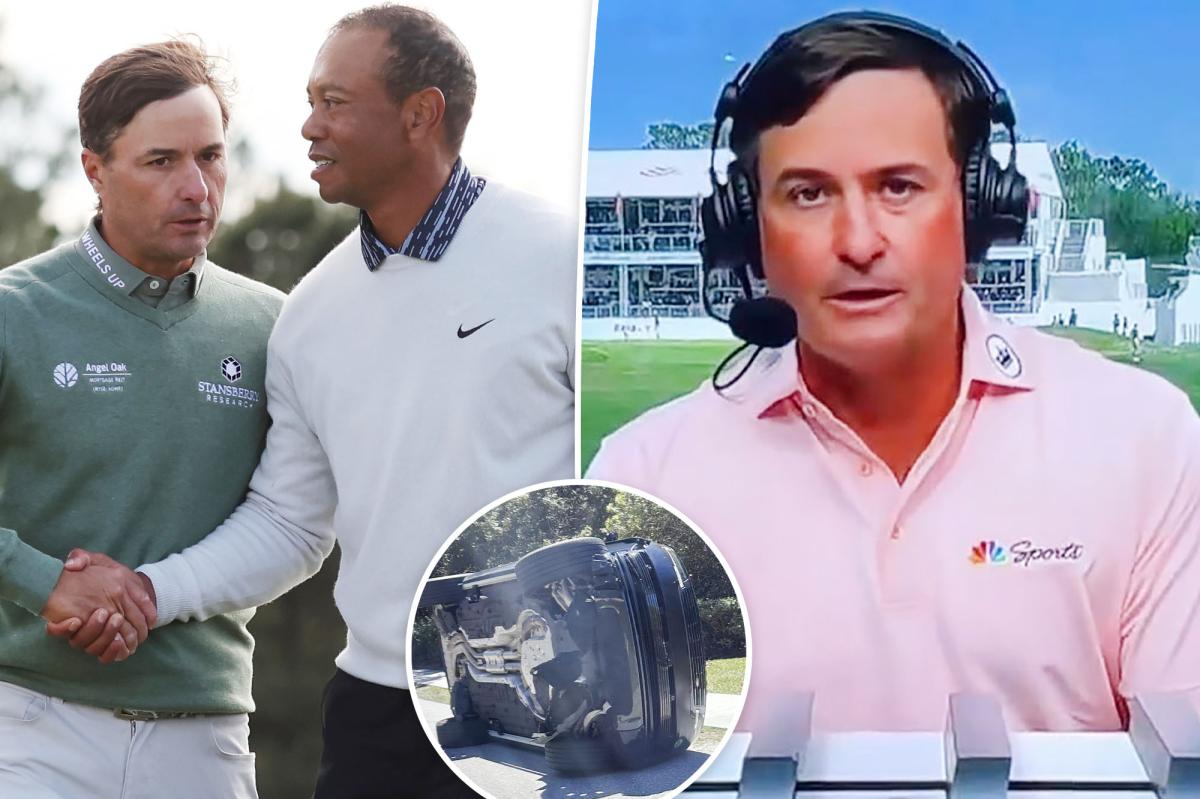
Tiger Woods’ teammates have called the golfer’s drink-driving arrest “very concerning.”
Kevin Kisner, Woods’ teammate at Jupiter Links Golf Club in TGL’s indoor golf league, appeared on NBC and spoke about Woods’ mental state ahead of his car accident and DUI arrest.
“He was really committed to the game, practicing and trying to get back in shape,” he said. “He signed up for the U.S. Senior Open yesterday. He was trying to come back and do whatever he could to help our TGL team. He was looking to get ready and hopefully try for the Masters.”
Kisner called it “a truly unfortunate event.”
“The only good thing is that no one was injured in this incident. We can all move on and hopefully help him recover,” he said.
Woods, 50, was arrested and charged Friday with DUI, criminal damage to property and refusing to submit to a legal test after a car crash involving his Land Rover shortly after 2 p.m. on Jupiter Island, Florida.
Authorities say the man crawled out of the car after the crash and was later seen talking on the phone next to the Land Rover. Woods was arrested but later released overnight.
Woods’ friends spoke out about the incident. Former PGA golfer Mark Lai said the golfing great must be held accountable after numerous violations of the law and car accidents.
“I feel bad for him, (but) I don’t like to sugar-coat it,” Lai said on Saturday’s “Fox & Friends Weekend.”
“And the way I look at it, there needs to be some sort of punishment, an ejection or some type of suspension from the game.”
He added: “I wonder where that discipline he learned to impart on the golf course takes root in his personal life. He has his demons.”
Retired golf pro Brandel Chamblee said Woods needs to quit golf.
“Why should he play golf anymore?” Chamblee told Golf Central in an interview Friday. “I think he should probably ask himself that. Consider not playing golf anymore.”
Chamblee said it was clear that Woods had a history of pushing himself beyond his physical limits “to the point where he continued to injure himself.”
“These surgeries and injuries require prescription pain medication,” he says. “If you haven’t racked your brain for the past 20 to 30 years, you can connect the dots to pain relief and addiction to painkillers.”
