

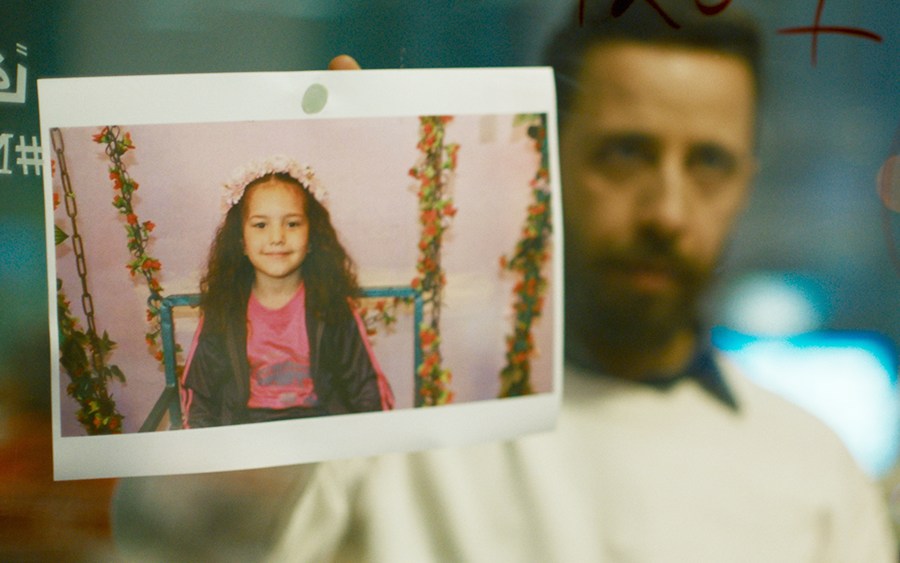
The country’s Central Board of Film Certification (CBFC) has blocked the release of Kauser Ben Hania’s Oscar-nominated feature film “The Voice of Hind Rajab” in Indian theaters due to political reasons, according to the film’s local distributor.
“Voice of Hind Rajab,” which tells the story of a real five-year-old Palestinian girl who was trapped in a car attacked by Israeli forces in the Gaza Strip and later found dead, has been censored by the CBFC because “the film is very sensitive,” distributor Manoj Nandwana, who heads Mumbai-based Jai Viratra Entertainment, told Variety.
Nadawana said he had screened The Voice of Hind Rajab for the CBFC in February, when he submitted the film for censor approval, and had planned to release it in India on March 6, “as we thought it would be a good day ahead of the Oscar ceremony on March 16.” Instead, Nadawana said the film had not been cleared for release and that CBFC members told her that if it was released, it would destroy India-Israel relations.
Indian Prime Minister Narendra Modi visited Israel in late February, the first visit by an Indian prime minister in the 25 years since the two countries established full diplomatic relations, and received a warm welcome. The visit, aimed at strengthening economic and technological ties between the two countries, highlighted the changes in Israel-India relations under the Modi government, whose acceptance of Israel marks a departure from India’s foreign policy, which has historically been supportive of the Palestinians.
“I told them: The relationship between India and Israel is so strong that it would be foolish to think that this film will destroy it,” Nadawana added, noting that “The Voice of Hind Rajab” has been released in “the United States, the United Kingdom, Italy, France and many other countries that have ties to Israel.”
“But they want to censor it anyway,” the distributor said.
CBFC did not respond to Variety’s request for comment.
In September, The Voice of Hind Rajab had its world premiere at the Venice Film Festival, where it received over 20 minutes of thunderous applause and went on to win the festival’s Silver Lion. The film was released in the United States by production partner Willa’s distribution arm after other US distributors left.
This is not the first recent example of India’s CBFC blocking the release of a film if it deems it politically sensitive. Last year, the Indian government canceled the release of Indian director Sandhya Suri’s Oscar-nominated film “Santosh,” even though the film, a police procedural set in a fictional northern state and deeply interwoven with India’s caste and religious politics, had secured advance script approval to be shot in India and took advantage of Indian government production incentives.
