

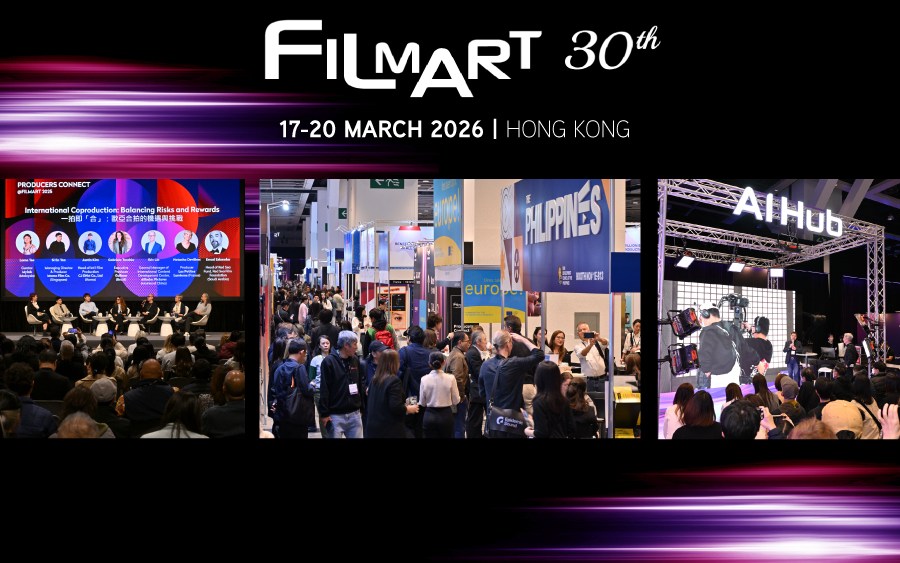
Among the many AI-related panels and workshops at this year’s Filmart, one forum on next-generation AI and the legal landscape surrounding intellectual property stood out.
The biggest concern for producers and directors is whether AI-assisted content is legally protected. Hong Kong government officials sought to allay these concerns at the Filmart forum, “Copyright Protection and Infringement Risks of AI-Generated Content.”
“(Works of art) can be subject to copyright measures if the creation was clearly completed by a human being,” said Sandra Hui, deputy director-general for intellectual property at the Hong Kong Intellectual Property Office.
In scenarios where directors use AI for post-production tasks like changing backgrounds or cleaning audio, the primary author is still a human. However, using AI to generate content solely from text prompts creates a quagmire in the legal framework.
Hui acknowledged that there are no internationally consistent practices or standards, and that the situation will change as case law on generative AI further develops.
Jurisdictions such as the EU, USA, and Singapore require human copyright. Mainland Chinese courts have taken the view that a work is protected by copyright if its output reflects the author’s prompt intellectual efforts. In one example provided by Hui, cases involving AI-generated images depend on the human prompt author demonstrating detailed instructions and ongoing changes to the generated image.
The UK, New Zealand and Hong Kong have special provisions for computer-generated works without a human author, meaning that works generated by AI will be protected by copyright.
A bigger concern, Hui suggested, is the inconsistent terms and conditions that exist from one AI platform to another. Some AI service providers claim copyright ownership by granting users a non-exclusive license, while others give full copyright ownership to their users. This can also vary by membership tier, with paid subscribers having broader legal rights.
“You need to pay attention to its terms, especially how that scope can be used and whether there are any restrictions that might impede that anticipated use,” Hui said.
