

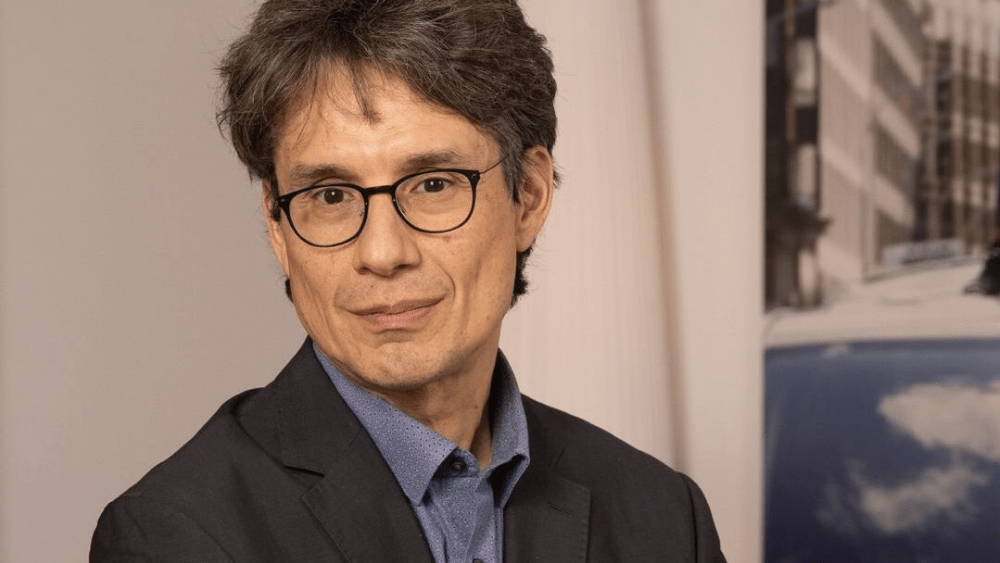
Amid growing debate about conglomerates, the changing global media landscape, and the suppression of free speech, leading documentary festival CPH:DOX has chosen “Media Sovereignty: Rethinking, Envisioning, Redefining” as the theme for its second annual CPH:SUMMIT. This year’s event brings together politicians, innovators, researchers and documentary experts to discuss the future of the audiovisual industry, with a particular focus on the current state of information, technology and changing notions of truth. In the opening keynote speech, Bruno Patino, president of public broadcaster Arte France, gave a gloomy but sharp and accurate assessment of today’s industry.
In his welcome speech at the summit, Doc Society’s Beedie Finzi presented the audience with a report generated by Claude, an AI bot that predicts what the industry will look like in 2030. The results were horrifying. The public broadcaster will become a “shadow” of what was once supposed to have evolved into “a mere commissioning entity.” Documentaries are split between expensive prestige and cheap creator-driven, with no middle ground. And the information environment will be flooded, with “a small, engaged audience” “clustered around a small number of deeply trusted brands.”
Most worryingly, the real loss by 2030 will be in the commons. Mr Finzi’s AI-produced report warned that the idea that society could have a common information experience would be “almost lost” within just four years and that rebuilding it “will take longer than it will be lost”.
Patino was then invited on stage to directly answer Claude’s prediction. An experienced journalist, author, media analyst, and close observer of recent developments in AI, the executive provided keen insight into how the rapid development of technology is disrupting our understanding of media. The main points of the keynote speech are as follows.
Pull behavior is replaced by push era
For a long time, Patino said, the public had “direct access to the media,” which he called “pull action.” People online are actively seeking information and access online newspapers and trusted sources to find out what’s going on in the world. With advances in social media and algorithm-based platforms, we have now entered the “push era,” the executive said. “People wait for content to arrive, not the other way around. This is a big change.”
power and saturation
What has evolved in this push environment is a scenario where two key industry dynamics exist: saturation and power. “The very concept of scale is changing,” Patino said. “The power of global corporations is growing and more powerful than ever before. Look at the recent acquisition of Warner Bros. by Paramount in the US. Everyone is competing to become a global interface and control their relationship with saturation.” Thanks to AI, our content creation has become “nearly limitless,” the expert said. “We can now produce content faster, cheaper, and in greater quantities than ever before.”
“These two dynamics can have similar outcomes,” he continued. “First, industry standardization of content due to increased power. Second, technical standardization of content due to decreased diversity. And that leads to a paradox in our industry: We are producing more content than ever before, but ultimately there is less diversity.”

Getty Images
Fragmentation as a key relationship with reality
Mr. Patino alerted the audience to how three ideas important to understanding contemporary culture are currently under threat: “First, the idea that culture is a source of both individual and collective liberation. Second, the idea that factual information shared with the widest audience contributes to democracy. And third, the idea that public broadcasting is a form of collective solidarity.”
He said the third transformation is “not just about our industry,” but “this is the very world we live in, where the validity of the European social and cultural model that we fought against after World War II is being questioned.” For Patino, the worst-case scenario is “a world where AI determines citizens’ place in society and the information, culture, and entertainment they have access to. In such a world, fragmentation becomes the primary relationship to reality.”
economy of relationships
The risk of fragmentation did not come out of nowhere, the executive added. It is a direct result of the “extensive history of the digital revolution.” Mr. Patino outlined three eras since the revolution. First, the advent of the Internet ushered in the era of access, and then the era of propagation, which began in 2007 and introduced concepts such as “algorithms, virality, visibility, social media,” and “the rise of the attention economy.”
With the introduction of AI, we have entered the “age of suggestion.” “A time when everything becomes blurred between human and machine, real and synthetic, reality and fiction.” “The age of social media has changed the place of truth,” the expert continued. “The media no longer speak directly to the people, but to their agents, who in turn speak to the people. The danger is that these agents become the primary mediators of our relationship with society, information, culture and entertainment.”
Patino says this is what he calls the “relationship economy.” “There is a growing risk that diverse voices and stories about the real world will become invisible, either because they are never presented to audiences or because they are lost in the age of content.”
Director David Borenstein accepts the award for Best Documentary Feature for “Mr. Nobody Against Putin” on stage at the 98th Oscars ceremony at the Dolby Theater on March 15. (Photo by Kevin Winter/Getty Images)
Getty Images
Union: the future of Europe
The relationship economy “has significant consequences for our profession,” Patino said. “There is a growing risk that diverse voices and stories about the real world become invisible, either because they are never presented to audiences or because they are buried under a flood of content. For us in Europe, this has created an overall challenge.”
“The first challenge is discoverability. How can our content be found in the age of AI, where AI is controlled by US-based giants? The second challenge is production itself. Our production logic itself is increasingly tied to US-based platforms. Europe cannot create acts with equal power in these areas.”
The question, Patino said, is simple. Is there another logic besides pure power? “In the face of the power of these platforms, Europe must rely on the power of the Union.” “This is an overall political choice. Europe remains the most effective geopolitical, social and cultural framework for rethinking identities, narratives and spaces.”
Patino said he believes Arte has the potential to become “the missing name in the European broadcast system.” The executive discussed how Arte has integrated a network of 14 public broadcasters, offers programming available in seven languages, and maintains strong connections with the creative ecosystem across Europe. Speaking the day after the Oscars, Patino took Arte’s hand up on his two big wins, “Mr. Nobody Against Putin” and “Sentimental Value.”
“Our ambition is not to build a huge structure, or even to create a European Netflix,” he added. “Our goal is much simpler: to give real substance to the European network: an alternative built on curiosity, discovery and openness.”
