

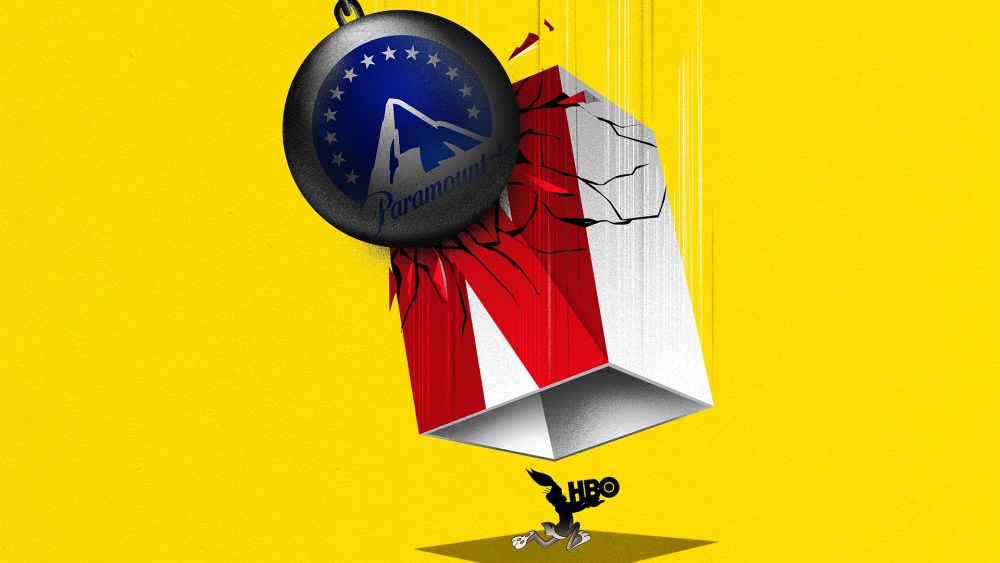
Ted Sarandos had just wrapped up a White House meeting with Attorney General Pam Bondi on Thursday when Warner Bros. Discovery released a statement announcing that Paramount’s latest bid for the media company was a “superior proposal” to the one that Netflix had offered. With his deal to buy the 100-year-old film and television giant hanging in the balance, Sarandos quickly consulted with a key team of executives, which included CFO Spencer Neumann and his co-CEO Greg Peters, who had been overseeing Netflix’s bid for Warners, sources say.
Under the terms of its agreement to buy Warner Bros. Discovery, Netflix had four business days to equal or surpass a better offer. But the numbers didn’t lie. Paramount was now willing to pay $31 per share to buy all of Warner Bros. Discovery, including its struggling cable business. Netflix, which only wanted Warners’ studio and streaming business, did not want to dramatically enhance its bid of $27.75 per share. Sarandos didn’t see the point of dragging things out.
“If you know you’re not going to match an offer on day one, why wait until day four?” a source with knowledge of the deliberations said.
Sarandos placed a call to David Zaslav, Warner Bros. Discovery’s CEO, to let him know the streamer was walking away from a pact that would have given Netflix control of a library that included everything from Harry Potter to Batman and Tony Soprano. Then Sarandos and Peters released a joint statement in which they said, “We’ve always been disciplined, and at the price required to match Paramount Skydance’s latest offer, the deal is no longer financially attractive.”
“This transaction was always a ‘nice to have’ at the right price, not a ‘must have’ at any price,” they added.
An internal email was sent out to Netflix staffers that hit similar notes; namely that the streamer didn’t want to overextend itself and would concentrate on growing organically rather than by acquisitions, as it has done for most of its nearly 30-year history. However, the brave face put on by the co-CEOs could not shade the truth that the company had been gearing up for what was likely to be a transformational acquisition — and then suddenly, it wasn’t.
“This deal could have accelerated Netflix’s growth on top of a strong existing trajectory by attracting new subscribers, reducing churn and driving more engagement,” wrote Robert Fishman, media analyst with MoffettNathanson Research.

In December, Warner Bros. Discovery CEO David Zaslav hosted Netflix co-CEOs Ted Sarandos and Greg Peters on the Warner Bros. Studio lot to meet with leaders across the company.
Joe Pugliese and John Nowak for Warner Bros. Discovery
Netflix was wholeheartedly preparing for a regulatory fight to close the deal at the moment earlier this month that it agreed to WBD’s unusual request for a waiver from the merger agreement reached on Dec. 5 in order to hold negotiations with Paramount Skydance, according to an individual with knowledge of the situation. At the same time, WBD’s board was under pressure from investors and corporate watchdogs to engage with Paramount Skydance, which went from making unsolicited offers last fall to filing a lawsuit against WBD in January in an effort to force it to disclose more details about the valuation methodology used in reaching Netflix’s $27.75 per share offer. It all added up to a lot of noise. Netflix was ready to fight fire with fire — until Sarandos and Peters decided to bow out. That decision too — described by one observer as “putting shareholder value above executive ego” — is drawing praise from the investment community.
“It signals that Netflix believes in its internal growth story enough to maintain M&A discipline. We also believe the future Paramount Skydance Warner Bros. Discovery — they’ll need a better name — could finally transform two subscale media companies into a more serious industry player, provided management has the financial flexibility to execute on its vision,” Fishman wrote.
Paramount’s new owner, David Ellison, has been relentless in his pursuit of Warner Bros. Discovery, working his connections on Capitol Hill, while making a spirited case that his company was offering a better deal for shareholders. This month, he and his team pulled off what many analysts and industry figures thought was impossible, forcing Warner Bros. Discovery to come back to the negotiating table.
And Ellison was determined to make the most of the opportunity. While fine-tuning his pitch, he relied on a core team of trusted advisors and board members such as Safra Katz, Justin Hamill and Gerry Cardinale. Paramount’s Chief Operating Officer Andy Gordon worked closely with his investor relations group and advisor Faiza Saeed of the law firm Cravath, Swaine & Moore. Melissa Zukerman, Paramount’s chief communications officer, also was involved in the strategy sessions. Conspicuously absent from all WBD-related proceedings was Paramount president Jeff Shell, who is currently embroiled in controversy over allegations he leaked sensitive financials in CBS’ $7 billion UFC deal.
During the seven-day negotiating period that ran Feb. 17 to Feb. 23, WBD and Paramount Skydance leaders never once met as a group in person. All the discussions were held via video conference calls, emails and by phone. There was an evident chill — or at least lack of chumminess — between the sides. Some of that has to do with the tangled history between the players. Paramount’s unsolicited offer to buy WBD last September set off a domino effect that forced Zaslav and his team to hold an auction for the company much sooner than they had planned. And Paramount’s desire to buy WBD’s linear cable channels derailed the plan that was in the works to spin them off into a standalone company dubbed Discovery Global.
Despite the bad blood, a weekend of virtual talks between Paramount and WBD saw Ellison’s ninth offer sweetened from $30 per share to $31. Paramount also offered shareholders a “ticking fee” for each quarter the acquisition might be stuck in the regulatory process. It was an offer David Zaslav couldn’t refuse.
Ellison was taking meetings at Skydance’s sleek Santa Monica headquarters on Friday when word came down that the path had been cleared for Paramount to take WBD. Shortly before Netflix publicly bowed out, champagne was rolled into the executive suite at Paramount’s Melrose lot. The mood was ebullient, partly because while Netflix deemed Warner Bros. “nice to have,” Ellison always saw the studio as “must have” if he was going to realize his ambitions to create a new media leviathan.
But now comes the even harder part. If Paramount is able to secure regulatory approval, a process that insiders predict will take at least a year, it will have to find a way to grow the company’s streaming business while overseeing the decline of cable. And it will have to pull off that transition while servicing more than $78 billion in debt. That’s left some industry executives skeptical that Paramount will make good on its promise to increase its output of streaming programming, while making 30 theatrical film releases a year, the most of any studio by a wide margin.
Indeed, if the WBD transaction is completed, Team Ellison will have an even steeper climb to bring the enlarged Paramount back to the summit of Hollywood. The vertical merger of Paramount and Warner Bros.’ film and TV studio operations is guaranteed to be a bloodbath of layoffs and a senior management “Game of Thrones” environment as the new regime decides who stays and who goes between Paramount Pictures and Warner Bros. Pictures as well as Warner Bros. Television, CBS Studios and Paramount Television Studios, among many other imprints. The same questions loom over HBO Max and Paramount+ and the management of WBD’s large portfolio of linear cable channels that include CNN, TNT, TBS, Cartoon Network, Discovery Channel, TLC, Animal Planet, Food Network and HGTV.
Given the behind the scenes drama that has enveloped CBS News since Ellison took over Paramount Skydance, the mood was grim at CNN after the news broke in real time Thursday. One persistent sentiment shared by staffers from various divisions of WBD was what one studio insider described as “complete and total fucking merger fatigue.”
If completed, the Paramount transaction will mark the third time that Warner Bros., HBO, CNN, TNT and other channels have been sold to new owners just since 2018, when AT&T sealed its purchase of Time Warner, after winning an antitrust trial in the first Trump administration. That was followed in 2022 by the WarnerMedia merger with Zaslav’s Discovery Inc. In both cases, WB and HBO endured a long period of limbo while legal and regulatory processes ensued. And all of that has unfolded under the backdrop of massive disruption across the entertainment business.
WBD troops were bracing for another long merger slog regardless. But as the tables turned quickly on Thursday afternoon, many rank and file staffers expressed regret that the studio would not be hitched to the industry’s dominant subscription streaming platform but rather to a smaller, struggling rival legacy media conglomerate. There is great skepticism about Ellison’s ability to make the high-wire act work while Paramount Skydance shoulders a mountain of debt supplied by a consortium that includes Middle Eastern sovereign wealth funds.
“Debt is debt,” says Rick Morris, a professor at Northwestern University’s School of Communication. “Debt will stop them from taking new initiatives, from investing in content, and it’ll take a period of time to work off. And many companies fail at working off the debt, and that is part of the reason that Warner Bros. is for sale.”
There is little doubt that Paramount Skydance will make massive cuts to WBD operations for the sake of de-leveraging the balance sheet. If all goes as planned, the company will carry a debt ratio of nearly 7 times its annual earnings — a huge red flag for credit agencies and many investors. Paramount has pledged to swiftly cut its debt-to-earnings ratio down to 4.4 times earnings, which means finding billions of dollars in cost savings from the jump. The WBD transaction is backed up to an unprecedented degree by a guarantee made by Larry Ellison against his personal fortune, buoyed by shares in Oracle, the software giant that he co-founded in 1977 when computing was in its infancy. Larry Ellison is also on the hook to invest many more billions should the enlarged Paramount Skydance struggle to maintain enough cash flow to support operations.
Laurent Yoon, media analyst with Bernstein, sees WBD as a necessity for Paramount but one that will not be easy on the rank and file tasked with running the businesses.
“Overpaying for WBD to accelerate growth is perhaps better than facing a mediocre standalone trajectory — at least this gives (Paramount) a shot at greatness, in our view.. But we do not expect them to come out swinging too hard,” Yoon wrote in a Feb. 26 research note. “Before they can invest in growth, they’ll need to cut deep and fast, and allocate most of their free cash flow to interest expense and de-levering. This is effectively the same position WBD was in from ‘22 (post-merger) through ‘25, a period that constrained growth despite having quality studios and IPs.”
In the Netflix-WBD merger scenario, filmmakers were concerned about Netflix’s commitment to the theatrical business, noting that Sarandos had earlier dismissed cinemas as “outdated.” That left them skeptical of the company’s promises that it would continue to release Warners films on the big screen and honor traditional home entertainment windows. Paramount, in contrast, has loudly argued that it is the true defender of the cinematic experience and has promised to increase the number of films that the combined studios will release in theaters.
Yet having Paramount own Warners Bros. Discovery has raised other concerns for artists, some of whom worry that Ellison’s coziness with the Trump administration will stifle free expression. They’ve been alarmed by his moves at CBS News, where he has installed Bari Weiss, a conservative columnist best known for her anti-woke jeremiads, as editor-in-chief. It’s expected that Weiss will have a big role in steering CNN down the road.
“Ellison scares the shit out of me,” says one A-list director. “Are the movies they put out going to be catered to Trump’s taste? Are they going to start cracking down on content that they don’t find to be ideologically aligned with the right?”
Ellison has earned that skepticism. In his aggressive pursuit of WBD, he has not been shy about flexing his family’s wealth (his father Larry Ellison is one of the world’s richest men) and connections to President Donald Trump. In lobbying publicly and privately for Paramount’s unsolicited WBD bids, Team Ellison sought to amp up concerns about Netflix exerting monopoly power over the streaming pay TV marketplace and having the ability to dictate pricing and deal terms for Hollywood’s creative community. The Ellisons also made their case to regulators in the U.K. and European Union, which have a track record of tougher enforcement of antitrust and concentration issues. David Ellison went so far as to attend Trump’s State of the Union address to Congress Tuesday as a guest of Sen. Lindsey Graham, a key confidant of the president. One observer compared Ellison’s trek to the Capitol earlier this week to the row of tech leaders who attended Trump’s inauguration in January 2025 — an image that has become symbolic of the fact that big business and moguls — the likes of Jeff Bezos and Tim Cook — are kowtowing to Trump’s authoritarian style of leadership.
“This process speaks volumes,” says J. Christopher Hamilton, a professor of Syracuse University’s Newhouse School of Public Communications and an attorney. “Companies don’t have to go behind the scenes any longer to court lawmakers and this administration doesn’t feel like it has to be subtle about who it wants to reward and who it prefers to own businesses.”
Netflix’s Sarandos also invested in personally lobbying political leaders on the merits of the deal. He endured a two-hour grilling in the Senate at a hearing on Feb. 4 that demonstrated the depth of the fight that Netflix would face. In addition to federal pressure, state attorneys general are lining up to launch their own local probes into the transaction. Now they will focus more on vertical-merger issues for two companies with mostly overlapping operations versus the specter of monopoly power — a loaded term that raised the stakes for Netflix no matter how many times Sarandos pointed to independent Nielsen audience data showing that even combining the streaming service with HBO did not rise to the level of what is traditionally considered to be a monopoly-level of market share.
On Friday, as Netflix staffers digested all the news, more than a few executives expressed the feeling that the streamer may have dodged a bullet. And for their troubles, Paramount Skydance will pay them the $2.8 billion breakup fee that Netflix negotiated in the agreement it inked with WBD’s board on Dec. 5.
“I think there’s a sense of relief on the Netflix side that we came close to getting it, and now we have an out and we got paid for the time we spent doing it. There’s some disappointment in not getting what you want and a relief that you didn’t get it,” said a senior entertainment lawyer with knowledge of the situation.
Now, as the town’s attention shifts from the bidding war to what is likely to be a war of attrition, there are fears that the union of Paramount Pictures and Warner Bros. Pictures will result in one fewer buyer of films — and that WB will be hamstrung on dealmaking and big long-term swings while it waits for the sale to close. Already, filmmakers say that it’s taking longer for them to get an answer from the studio on the status of their projects, noting that the company is wary of committing too much money to new films when a different ownership team is waiting in the wings.
Ellison’s politics have alarmed many in left-leaning Hollywood, but some people are impressed with the executive team he has installed at Paramount. Josh Greenstein, who was brought over from Sony Pictures to help oversee the film studio with Dana Goldberg, has earned high marks for making tough calls on film projects, while urging the studio to land splashy projects from the likes of James Mangold and Timothée Chalamet.
“Josh is the real deal,” says one media executive who has worked with him. “He is a straight shooter. And in a matter of months he’s stocked a cupboard that was bare.”
At the same time, Warner Bros. Pictures has been on an unprecedented roll at the box office since the second half of 2025, after enduring some painful flops in 2024 and early in 2025. To many, it feels as though just as WB Pictures chiefs Pam Abdy and Michael De Luca were hitting their stride with commercial and critical successes — the studio’s “Sinners” and “One Battle After Another” are this year’s top film award season contenders — the executive turnstiles are about to swing once again.
“If they’re smart, they’ll keep Mike and Pam,” says the media executive. “But there’s only so much executive power to go around. Decisions will need to be made.”
For Paramount, the road ahead will be paved with key management and strategic decisions, as well as a herculean effort to revitalize two media giants that have often struggled to navigate the streaming era. Up the road from Paramount’s Melrose lot in Hollywood, Netflix brass also face momentous decisions about their future. But first they’ll need to figure out what to do with the $2.8 billion check that Paramount wrote them on Friday. Think of it as a dowry that a jilted suitor gets to keep.
Matt Donnelly and Todd Longwell contributed to this report.
