

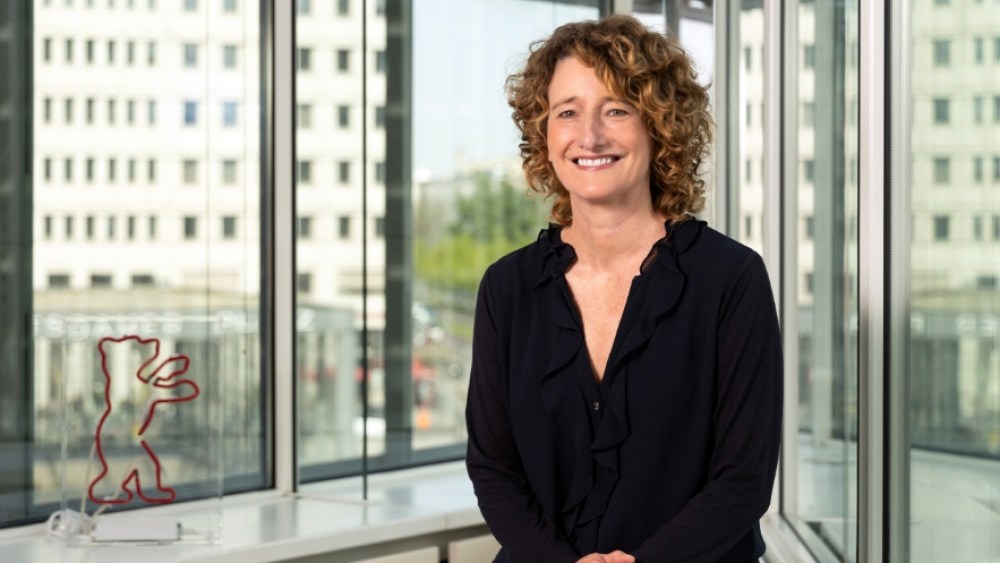
A petition in support of Tricia Tuttle, festival director of the Berlin Film Festival, has now reached around 700 people in the film industry, including directors, producers and actors.
Signatories include Oscar-winning director Sean Baker, Oscar-nominated director Todd Haynes, Oscar-nominated actress Tilda Swinton, Oscar-nominated director of The Secret Agent, and Oscar-nominated director Kleber Mendonça Filho. Director Oren Moverman, Oscar-nominated director of Waltz with Basil, Ari Folman, producer Nancy Spielberg, and Oscar-nominated director of The Secret Agent Ilker Chatak. Teacher’s lounge. ”
Other names included include Oscar-winning director Caroline Link of Nowhere in Africa, Golden Bear-winning director Nadav Lapid of Synonyms, Emmy Award-winning actor/writer/director Maria Schrader and director Ira Sachs of Unorthodox, and Oscar-nominated director Maren Ade of Toni Erdmann.
The petition was submitted ahead of an extraordinary meeting convened by Germany’s Culture Minister Wolfram Weimer of the Berlin Film Festival’s governing body on Thursday morning to discuss the “future direction” of the festival. The meeting is believed to have been called in response to criticism of political rhetoric at the festival.
“If an extraordinary meeting is called to decide the future of the festival’s leadership, more than just one appointment is at stake. At issue is the relationship between artistic freedom and organizational independence,” the petition reads.
The full statement is below:
Open letter on the future of the Berlinale
As filmmakers in Germany and abroad, we are watching the current debate surrounding the Berlinale and the proposed dismissal of Tricia Tuttle with deep concern. We will protect the essence of the Berlinale, a place of exchange.
The Berlinale is more than just a red carpet and a series of headlines. It is a space where perspectives intersect, narratives are questioned, and social tensions are exposed. This is where the discourse unfolds and is the very center of the film.
Recent criticism has focused on his comments from the stage. None of these statements were made by the festival’s leaders themselves, but by invited filmmakers. International film festivals are not diplomatic tools. It is a democratic cultural space worthy of protection. Its strength lies in its ability to hold diverse perspectives and give visibility to multiple voices.
A photo of the filmmakers and the festival’s leadership, which also shows the Palestinian flag, has been the subject of similar criticism. Taking pictures with international guests is also part of the custom of such festivals. Visibility of different identities is not encouraged. It is an expression of an open and democratic public sphere.
When personnel implications are derived from personal statements and symbolic interpretations, it sends a worrying signal that cultural institutions are subject to political pressure.
If an extraordinary meeting is called to decide the future of the festival’s leadership, more than just one appointment will be at stake. At issue is the relationship between artistic freedom and institutional independence.
The Berlinale has always been political, not party politics, but social engagement. Films make conflicts visible, broaden horizons, and make experiences of injustice and violence tangible. The film raises moral questions and asks us to endure ambiguity rather than resolve it prematurely. It sheds light on power structures and makes visible experiences of oppression. This is not to provide simple answers, but to enable meaningful public debate. Therein lies the value of democracy.
Especially in times of global crisis, we need space to maintain our differences. The independence of cultural institutions not only protects artistic freedom, but also the vitality of democratic discourse itself.
When any controversy leads to institutional consequences, the discourse takes control.
We support a culture of interaction, not intimidation.
Where diversity is visible, democracy survives.
