

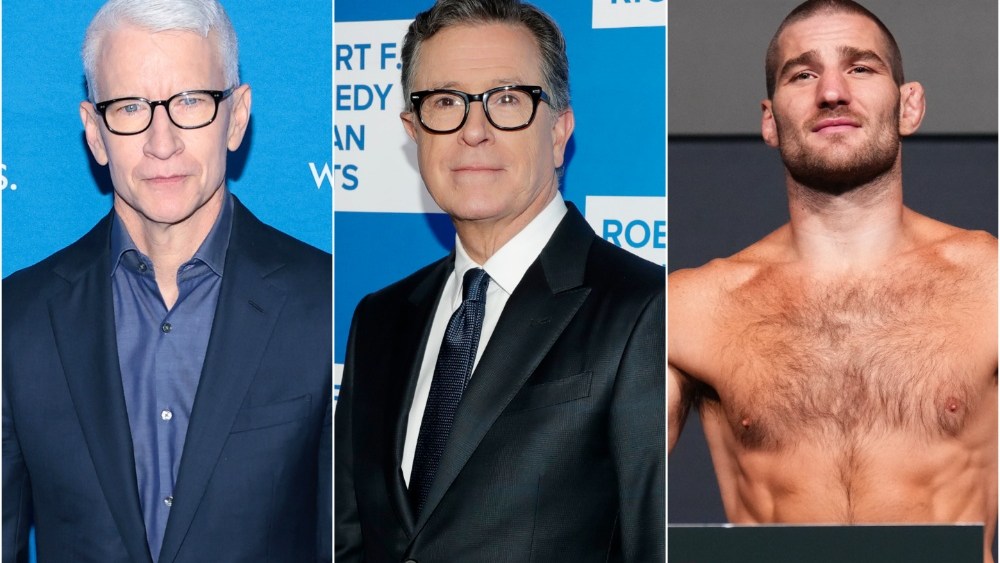
Anderson Cooper turned down the opportunity to continue working there. Stephen Colbert has recently become vocal about his relationship with a lawyer at the same firm. And UFC fighter Seth Strickland didn’t think the league’s important relationship with the company would be jeopardized if he made profane and derogatory remarks about celebrities while trying to promote his upcoming fight on the conglomerate’s streaming service.
The company in question is Paramount Skydance, the owner of CBS, Paramount+, and cable networks such as MTV and Comedy Central. And just as the organization is working toward one of the most important chapters of its short existence, it appears to have a talent problem.
“It may be easy for Paramount Skydance to sign someone who appeals to the MAGA base, but can PSKY sign someone who appeals to a larger, more profitable audience?” asked Blair Levin, a media analyst at New Street Research, in a note issued earlier this week. He sees similarities with events held at the Kennedy Center, which artists have abandoned because President Trump has called for stricter measures on the types of shows and events that can take place there. “The movement of talent could lead to the movement of customers, and the downward spiral could repeat,” he warned.
Paramount Skydance is in the midst of a seven-day grace period in which it can make a “best and final offer” to Warner Bros. Discovery to break away from an existing deal to sell its studio and streaming assets to Netflix and then spin off its television assets as a separate publicly traded company. The negotiation period with Paramount ends on Monday, February 23rd. Netflix, which granted Warner an exemption from new negotiations with rivals, will have four days to make a counteroffer in case Paramount submits a higher bid.
While this scene was playing out on Wall Street, the company was not considered paramount in the minds of some key players. A Paramount Skydance spokesperson did not immediately respond to a request for comment.
Anderson Cooper surprised the industry on Monday when he released a personal statement saying he was leaving CBS News’ “60 Minutes” to focus on expanding his role at CNN and spend more time with his young children. Still, the move was interpreted in media circles as a result of dissatisfaction with the venerable newsmagazine’s treatment in recent months, with executives pressuring the program to cut back on hard news and investigative stories. One such segment, by correspondent Sharyn Alfonsi, was delayed for several weeks after CBS News’ new managing editor, Bari Weiss, said more action was needed from Trump administration officials. When this story was broadcast, it was broadcast without any editing, although some comments were added to the foreword and afterword.
It is highly unusual for an anchor to leave a major news program without a prepared statement from the news department or its parent company. CBS News took nearly four hours to respond to the news of Cooper’s departure. This indicates that this was an unexpected event. CBS later said of Cooper, “If he wants to come back, ’60 Minutes’ will be here.”
Later that night, Stephen Colbert led the company on a mission. During his late-night show on February 16, he told viewers that network executives had told him that an interview with Democratic Texas Sen. James Talarico should not be aired on CBS. That’s because it could run afoul of the Trump administration’s new guidelines for TV stations to host talk shows based on the so-called “equal time” rule. Broadcasters and radio stations are required to give candidates equal time in elections after they appear.
“I was told, in no uncertain terms, that not only could I not not wear him, but I could not mention not wearing him,” Colbert said. The show then published the interview on YouTube.
CBS disputed the allegations, later pointing out that Colbert and his staff were given “legal guidance” but were not “prohibited” from broadcasting the interview. This sparked another round, with Colbert retorting on Tuesday, “I don’t even know what to do with this crap.”
Strickland, who has a reputation for outrageous comments, went further on Wednesday, hurling insults and offensive language at female athletes including Bad Bunny and Ronda Rousey. He made the remarks during a media event promoting the UFC fight, which will be streamed on Paramount+ on Saturday.
Paramount isn’t shying away from its eagerness to align with the Trump administration. But doing so could make it difficult to monetize operations, Levin said in a research note. “Telling talent that management’s top priority is to please government officials is a surefire way to steer them to entertainment platforms where management prioritizes supporting talent who know how to attract customers,” he says.
While talent battles have largely taken place behind the scenes in recent decades, Purmount executives need to realize that anchors, actors and sportscasters increasingly have the power to tell viewers onscreen when they’re unhappy with their TV lives. Pat McAfee, the versatile ESPN commentator, and Rachel Maddow, the studious MS Now news analyst, seem to have little in common. But both made their media employers do their job with their candid words on screen. Same goes for Joe Scarborough, Mika Brzezinski, and Chuck Todd.
What gives this talent so much confidence in criticism? Perhaps due to the rise of social media and creator forums like newsletters and video podcasts, telling it like it is (or at least telling it like it is) is the trend these days. Paramount Skydance should probably expect more of this to happen in the coming months, even if it’s not going all-in on acquiring major media assets.
