

Turkish cinema appears poised to make a global breakthrough this year, despite being held back by economic and political constraints. The milestone Berlin 2026 delegation will consist of the premiere of three feature films, two of which will compete for the Golden Bear, and will kick off the campaign.
The Turkish government, led by authoritarian President Recep Tayyip Erdogan, has long silenced the voices of filmmakers through censorship laws and restrictions on state funding for projects deemed to violate political policies. In addition, the value of the Turkish lira has fallen to record lows due to rising inflation, which is impacting local production costs.
But Turkish directors, who often make their films abroad, “are full of energy and never give up,” says Basak Emre, former artistic director of the Antalya Film Festival. He is currently responsible for the Istanbul Film Festival’s revamped co-production platform, Meeting on the Bridge.
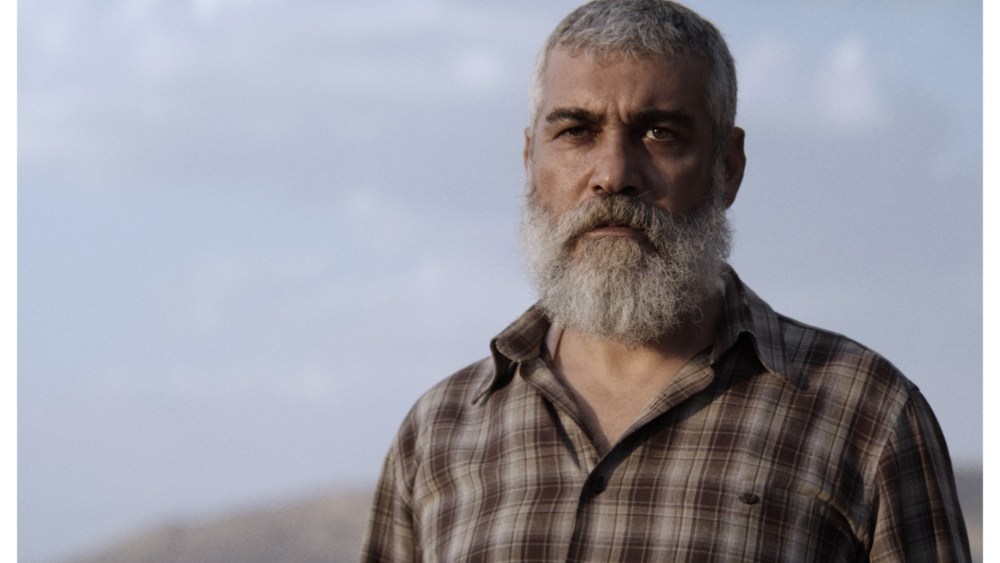
Turkey’s Berlin team is spearheading two competition titles: ‘Yellow Letters’ and ‘Salvation’ (pictured above), both by well-known authors who have been able to secure funding in Europe and elsewhere. Certainly, the directors did not shy away from politics in their films.
Berlin-born director Ilker Çatak is joining the Berlinale with “Yellow Letters,” but unlike his previous film, the Oscar-nominated “Teacher’s Lounge,” which was set in Germany and was shot in Germany, it takes place entirely in the midst of Turkey’s political repression. The film reflects the reality of the country, with Turkish actors Ozgu Namal (Deriya) and Tansu Bissar (Aziz) playing an artist couple who lose their jobs and whose marriage breaks down because of their political views.
Çatak is not sure whether “Yellow Letters” will be released in Turkish cinemas. “That’s a big question mark,” he says. However, the director also points out that if the Ministry of Culture censors his film, “it will draw more attention to it.”
Emin Alper says he was “blacklisted” from government funding for Salvation after producing the 2022 drama Burning Days. The drama reflected the rise of authoritarian populism and rising homophobia, not just in their own country. His latest film, set in a remote mountain village in Turkey, is about a land dispute stemming from a dispute over the rights of Turkey’s Kurdish minority. Although the film may attract political attention, Alper is hopeful that “Salvation,” which also has distribution in Turkey, will be able to pass the censors. He noted that tensions between the government and the Kurdish rebel group PKK have eased and that “the atmosphere on that front is a bit more relaxed.”
Also set in a Turkish village is the more intimate 2026 Berlin Forum title “Hear the Yellow” by second-year director Banu Sivaci. In the drama, a young woman named Suna returns to her parents’ home in the countryside, which is “riddled with rifts caused by drought,” making it “as fragile as any local relationship,” the synopsis says. Sivaci, who debuted in 2018 with Berlinale’s The Pigeon, was able to finance Hear the Yellow entirely in Turkey.
“A new generation is coming and despite the challenges, production is exploding,” Alper says.
Chatak agrees. “Turkey has a huge amount of talent and great stories coming out of it, which is often the case in a high-stakes society.”
In fact, there are a number of promising completed films by prominent Turkish directors that will soon be submitted to film festivals. “Left Over,” the seventh feature in director Yesim Ustaoglu’s long-term project, is a road movie about a poet who leaves her home in Istanbul to return to her family roots, and will also be releasing a new documentary she has created. Ustaoglu broke out in 1999 with Journey to the Sun in Berlin.
Director Gurkhan Kertek, who made waves in Locarno with his 2024 atmospheric horror film “New Dawn Fades,” has completed “Horde,” which was shot during the coronavirus lockdown. Ferit Karahan, who was in Berlin with “Brother’s Keeper” in 2021, picture-locked “Gin Wedding”, which looks at the fate of three generations of a family.
Meanwhile, Turkey’s long-time Cannes darling Nuri Bilge Ceylan (Winter Sleep) is set to return to the set this year in a father-daughter drama (details are being kept secret). Director Khan Musideshi, who won the Grand Jury Prize at the Venice International Film Festival in 2014 for “Sivas” and went on to produce “Iguana Tokyo” and the TV series “Hamlet,” returns with “Dreamgirl.” The picture centers on a Romani girl who flees a small town in Eastern Anatolia where she is not welcomed. And Berkun Oya, creator of the Turkish hit shows “Ethos” and “Sisi”, will film the previously announced “Merci Charlotte” starring Juliette Binoche as a French woman who adopts a Turkish boy.
