

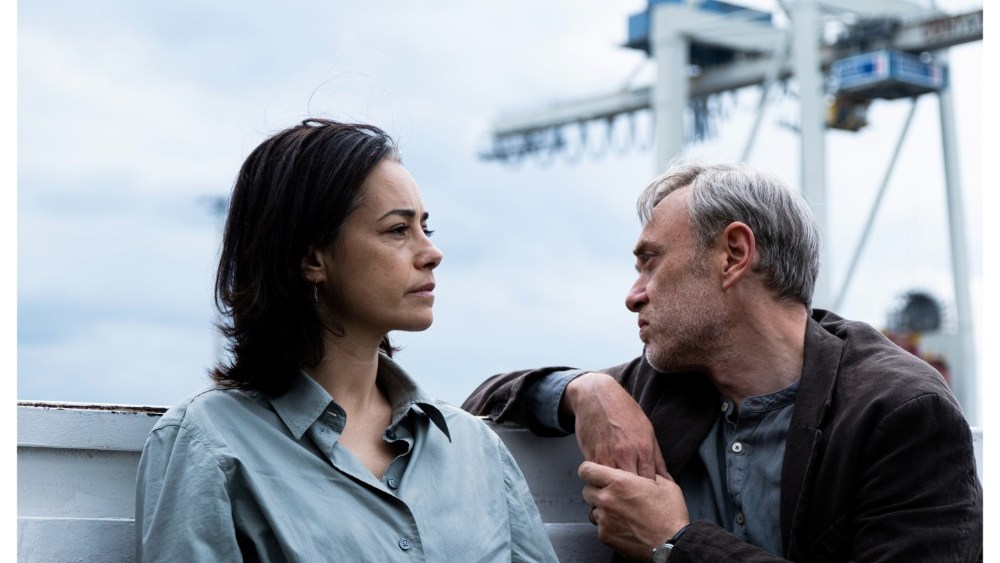
Ilker Çatak, who was born in Berlin to Turkish parents, returns to Bernale with Yellow Letters, but unlike his previous film, the Oscar-nominated The Teacher’s Lounge, which was set in Germany, it is set entirely in the midst of Turkey’s political repression, despite being filmed in Germany.
This timely political drama stars Turkish actors Ozgu Namal (Derya) and Tansu Bissar (Aziz) as an artistic couple whose political views cause them to lose their jobs and their marriage falls apart.
Çatak spoke to Variety about how recent political repression in the arts is not just a problem in Türkiye.
Why were you drawn to this story of a marriage disintegrating due to authoritarian political pressure?
I’ve always wanted to make a film about marriage. I’m married to a painter who also happens to be the co-writer of this film. And we were always fascinated by movies like Marriage Story (by Noah Baumbach), where there’s a certain tension between the lovers, but at the same time it’s very tender, very loving. And on the other hand, it’s downright harsh. And there was also a political aspect to this film. In 2019, I was in Istanbul and had heard that mass (political) layoffs were happening before then. But that day, I was sitting in a cafe with some of my actor friends, and one of the actors said to me, “You know what? “I got this letter and I was fired for smoking backstage.” And I said: “What?” And he said, “Yes, that’s what the letter said.” I talked about this with my wife and started reading about these layoffs and the impact they had on our family. Most people find themselves in situations where they have to sell their ideals. And we thought this was the perfect backdrop to tell the story of a marriage.
It is interesting that actress Deliya starred in a Turkish melodrama that sold well. Was that a comment on a Turkish television network?
It’s not just a Turkish problem. There is one in America too. Look what happened to Jimmy Kimmel! Look at what happened to Amazon’s diversity announcement a few years ago. Then Trump comes back and all of a sudden, hmmm! As if nothing had happened. I would be hesitant to enter this kind of network and business that has friendly relations with the government. Because I’m going to be part of their agenda, right? As an artist, I think it doesn’t matter if you’re in America or Turkey or wherever you are. You have to ask yourself, “Who am I going to sleep with here?” “Who is this person or institution? And who is he connected to?” I think that’s a question we have to ask ourselves as artists. And this question is getting louder and louder.
It seems as if he is on Aziz’s side. On one side is Aziz, a serious artist with a big ego. The other Deliya is more realistic. Does it look like that?
To be honest, I don’t take sides. I think I was hoping that Delia’s struggles and decisions would be revealed. First and foremost, that’s my job. It doesn’t judge, it helps you understand things. Of course, I want to be by Aziz’s side. But that’s a very limited perspective, and I also find it a bit outdated. You might call it a dreamy feeling. That’s no way to support a family. And first and foremost, you have to feed your family. The whole point of this movie is that I don’t want to criticize people who work at Fox Networks or whatever. I’m sure they have their reasons. But I’d like to question this behavior because I need a backbone. You need to know where you stand. I think that’s important as an artist.

Provided by: Berlinale
This interview has been edited and condensed for clarity.
