

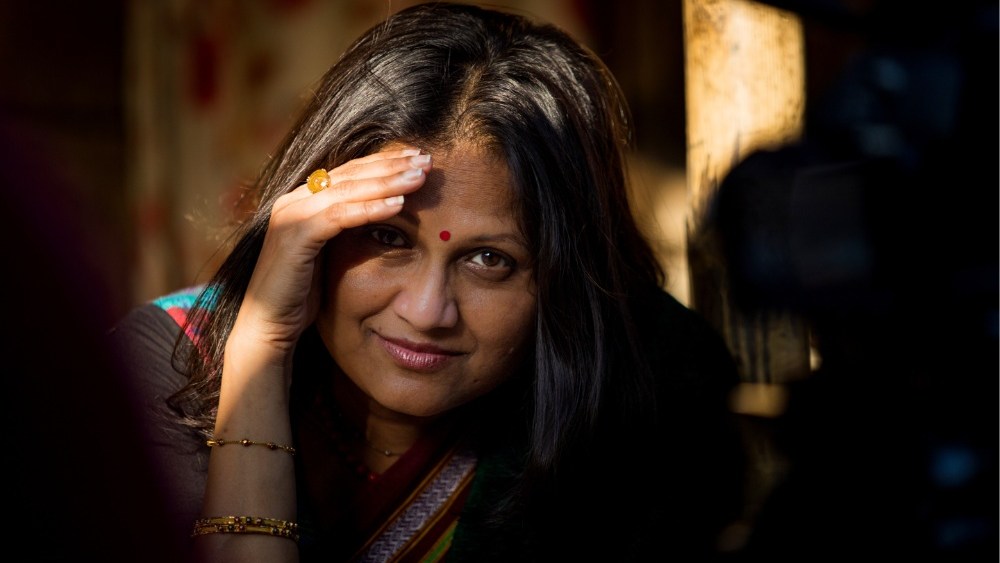
Bangladeshi filmmaker Reetha Ghazi will direct Shasti (Punishment), a modern-day adaptation of Nobel laureate Rabindranath Tagore’s 1893 short story, with an international production team supporting the project.
The psychological drama stars Pori Moni, Chanchal Chaudhary, Arnon Siddiqua and Alka Das in lead roles, with Qazi Ruma and Kamrunnahar Munni in supporting roles. Production is scheduled to start in Dhaka in October and November this year.
The film, based on Tagore’s original work, depicts the mysterious death of influencer Lucky, allegedly at the hands of his sister-in-law Meera, and has sparked a media frenzy. As a corrupt trial unfolds, the story explores themes of family secrets, betrayal, and manipulation in a city hungry for punishment.
This project will be Ghazi’s second full-length novel, following “A House Named Shahana,” which made history as the first Bangladeshi female director to win Best International Feature at the 98th Academy Awards.
Produced by Komola Collective, Sanat Initiative, Awedacious Originals, Goopy Bagha Productions, Screenxcope Australia and Black & White Workshop Inc. Ghazi is co-producing with Abid Aziz Merchant, Apoorva Bakshi and Arifur Rahman. Saqib Iftekhar and Rainbow Fong will serve as co-producers, Faisal Ghazi and Tulip Kabir will serve as executive producers, and Abbas Nocaste and Qazi Ruma will serve as co-executive producers.
The creative team will feature Ghazi and Siddiqua on the original story, with the script written by Ghazi, Siddiqua and Sadia Khalid Reethi. Alex Unai is the cinematographer, Tania Rahman is the casting director and line producer, Nahid Masood is the on-set sound, Rashid Sharif Shoaib is the background score and sound design, Sharmin Doza is the script supervisor, and Raza Sumit Rahman is the music director for Maizbhandari songs.
“I’ve been trying to understand the times we live in, and this film was born out of that sense of urgency and restlessness,” Ghazi said. “This film lives in contrasts: between timelines, between perception and reality in real and virtual life, between what is seen and what is hidden. It reflects the ongoing battle for truth, justice, and that many have fought in silence. Making this film was both a reckoning and a search for hope.”
Merchant added: “A modern interpretation of Tagore’s short story, ‘Shasti’ (Punishment) will not only leave a lasting impact on audiences but also inspire change through its powerful story.”
Director Bakshi said, “It was creatively exhilarating to work with Reetha Ghazi on this adaptation of Tagore’s Shasti. Her instinctive understanding of character, silence, and moral tension are essential qualities for translating Tagore’s world to film. This script is shaping up to be something truly special, respectful of the emotional complexity of the original but boldly reimagined for modern times.”
Director Rahman further added, “I always choose a director before a film. Reetha Ghazi is a powerful filmmaker who challenges society through empathetic storytelling. I’m willing to bet on her. This is our second journey together. Shasti is going to be one of the most intense psychological dramas of our time and I’m incredibly excited to be a part of it.”
A previous film adaptation of this story, directed by Chasi Nazrul Islam, was released in Bangladesh in 2004.
Director Iftekhar said, “Shasti is an unflinching examination of how power, gender, and mental health collide with public judgment in modern society without offering false solutions. The film takes its inspiration from Tagore, but is firmly rooted in the stark realities of present-day Dhaka, and speaks to a global landscape shaped by surveillance, social media instability, and institutional silence.”
Fong further added, “‘Shasti’ is a rare gem and emotional plunge that combines captivating cinematic elements with real value. I am confident that the film will resonate widely with audiences and garner support from film festivals around the world. As one of the co-producers of ‘Shasti’, I am excited about the script and the way the story is told. I look forward to seeing how director Reesa Ghazi will take this classic fable to the next level in the modern era.”

