

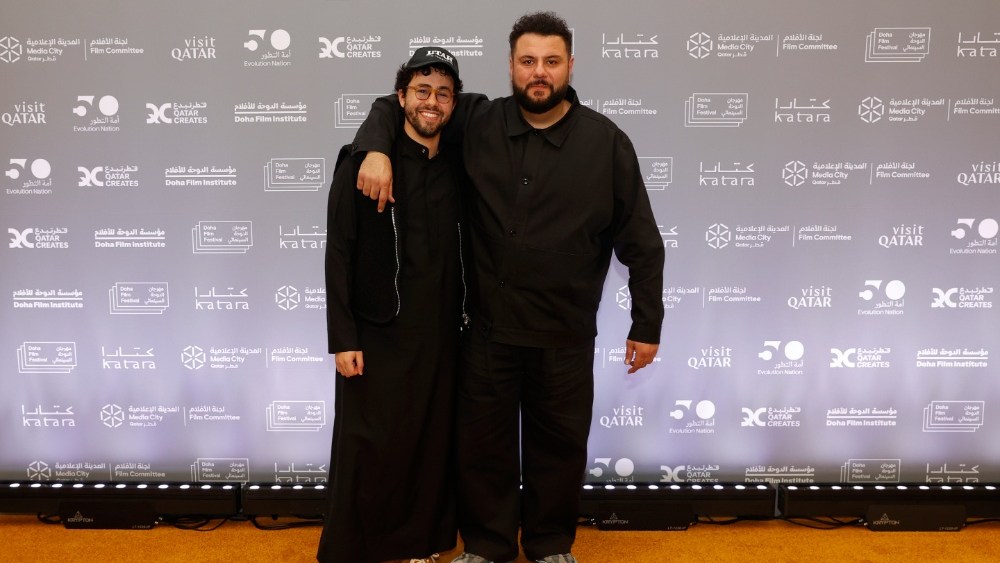
In one of the most well-attended lectures at the Doha Film Festival, Arab-American comedians Ramy Youssef and Mo Amer laid out their vision for a new era of Arab storytelling, calling on investors and emerging filmmakers in the region to support original stories and expand the creative pipeline. The pair, who appeared in a conversation moderated by MS NOW (formerly MSNBC) anchor Ayman Mohieldin, urged creators to rely on stories rooted in their own experiences and cultural specificities rather than copying Western formula.
“The world is not interested in seeing an Arab version of Everybody Loves Raymond,” Youssef said. “They want to see things they haven’t seen before. They want to hear from us.”
This idea has sparked a broader discussion that positions Arab creators as artists grappling with rare opportunities, rather than outsiders seeking recognition in Western markets. With new tax incentives, a rapidly developing production base, and a growing base of domestically and internationally trained filmmakers, Youssef and Ameer argued that the region is increasingly positioned to produce work that can compete on the world stage, if funding and infrastructure keep pace with creative ambitions.
Amer, whose self-titled Netflix series “Mo” was groundbreaking with his Palestinian-American protagonist and the Houston setting, said the conditions for telling these stories have changed significantly. “Our story has never been clearer,” he said. “The burden of explaining who we are before we can tell the story is fading away.”
Still, they emphasized that expression cannot dictate creative choices. Amer noted that Arab artists often feel torn between the expectations of multiple communities, including Palestinians, Americans, Arabs, and Muslims, and argued that this dynamic must be resisted. “You can never make everyone happy,” he said. “What I care about is: Is this what’s right for the story? Is it right for the character? That’s what stands the test of time.”
Youssef echoed that, framing their common approach as long-term storytelling designed to last, rather than following conversations as they happen to dominate the moment. “People see what they want to see,” he said. “If we focus on that, it becomes paralyzing. Our job is to make the best work we can and let art do the rest.”
Much of the conversation focused on the structural supports the region must build to sustain its own creative surge. Both artists emphasized that developing producers, showrunners, and directors is just as important as developing on-screen talent. For Amell, it starts with a decisive endorsement. “It’s all about identifying great talent and not being hesitant to invest in them,” he said. “Be the wind on their backs. Don’t be the wind on their faces. Great art happens when given a chance.”
This conversation unfolded during the inaugural edition of the festival, led by the Doha Film Institute, which was launched with a clear mission to position Doha as a new hub for regional and international talent. Even in its inaugural year, the event featured industry programming, co-production conversations, and networking platforms designed to strengthen the creative and funding ecosystem for Gulf and Arab storytellers.
Mr. Youssef encouraged regional financiers to become active partners rather than silent funders. “It’s worth more than money to you,” he told the crowd of industry insiders. “Your perspective, your values, that’s what the world needs. Don’t be shy about putting it out there.”
They both agreed that mentorship is central to sustainable growth. Youssef pointed out that both of his shows promoted assistants to writers and eventually creators. “If you hire someone as a production assistant, you want to see something that makes them think they might direct a movie someday,” he says. Meanwhile, Amer credits stand-up mentor Danny Martinez for charting his career when he was 17. “He said it would take 20 years to become an overnight success. That long-term commitment, that’s what we have to build here.”
They also addressed Hollywood’s long history of flattening and denigrating Arab and Muslim identities. Amer cited the documentary “Reel Bad Arabs,” which catalogs decades of stereotypical portrayals, as a reminder of how deep-rooted this pattern is. However, he emphasized that the most effective response is not just criticism, but output. “We just need more,” he said. “We need to be very proactive in the way we tell stories… I don’t care if it’s film, TV, comics, shadow puppets, whatever it is. We have to do everything possible to counter everything that’s happened over the last 100 years of how we’ve been portrayed in the West.”
After all, their message to emerging filmmakers was clear and urgent. Mr. Yusef said: And just do it. Guardrails are gone. ”
