

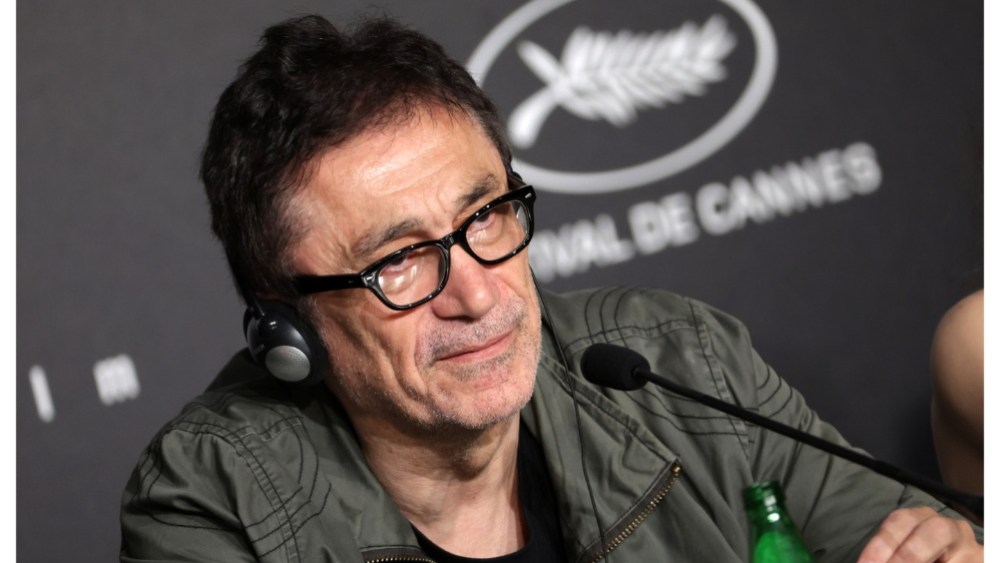
Turkish author Nuri Bilge Ceylan, who won the Cannes Palme d’Or in 2014 for “Winter Sleep” and has won numerous awards, has been criticized by the Iranian Independent Film Producers Association (IIFMA) for agreeing to attend the Iranian government-run Fajr Film Festival.
The Fajr Film Festival, Iran’s largest film event, will be held in the southwestern city of Shiraz from November 26 to December 3, and will screen 45 films from 30 countries, according to Islamic Republic News Agency.
The festival’s website announced that director Bilge Ceylan would be attending as a special guest, and several official Iranian and Turkish news outlets reported that he would head the festival’s jury.
Bilge Ceylan, whose other films include “Three Monkeys” (2008), “Once Upon a Time in Anatolia” (2011), “The Wild Pear Tree” (2018), and most recently “About Dry Grasses” (2023), did not immediately respond to Variety’s request for comment.
The Iranian government-controlled Tehran Times reported in October that Bilge Ceylan was in Tehran to hold a series of master classes at a government-sponsored event called “The Glory of Cinema.”
“The news of your cooperation with the Fajr Film Festival in Iran under the rule of the Islamic Republic came as a surprise and distress to those who have followed your work for many years, noting its humanistic and intellectual worldview,” IIFMA said in an open letter to Blij Ceylan on Tuesday.
IIFMA, chaired by Dubai-based dissident Iranian producer Kaveh Farnam, called on the Turkish director to reconsider his involvement in the Fajr film festival, arguing that his participation would “effectively reinforce the image that the government is trying to present about the country’s cultural situation, one that is inconsistent with the real experiences of people facing censorship, repression and bondage.”
Amid political turmoil, the current situation for Iranian filmmakers is fraught with strict state control, censorship, and the risk of imprisonment, as exemplified by the plight of prominent Iranian filmmakers Jafar Panahi (It Was Just an Accident) and Mohammad Rasoulof (The Sacred Fig Seed), both of whom were imprisoned for making films deemed to be against the Iranian regime.
IIFMA’s open letter notes that Iranian security forces have recently killed hundreds of anti-regime protesters in various crackdowns, particularly during the 2022-2023 nationwide “Women, Life, Freedom” movement.
“Following the widespread repression of mass protests during the Women, Life and Freedom movement, the Islamic Republic is trying to normalize everything by holding state-sponsored events and ceremonies,” IIFMA continued. “Among them, the Fajr Film Festival is one of the most important showcases for this effort, a showcase that today has little meaning to much of the Iranian art world.”
IIFMA further added: “The appearance of the name of an international filmmaker of your artistic stature and intellectual orientation in this festival is therefore nothing but a misuse of your reputation for this propaganda display.”
