

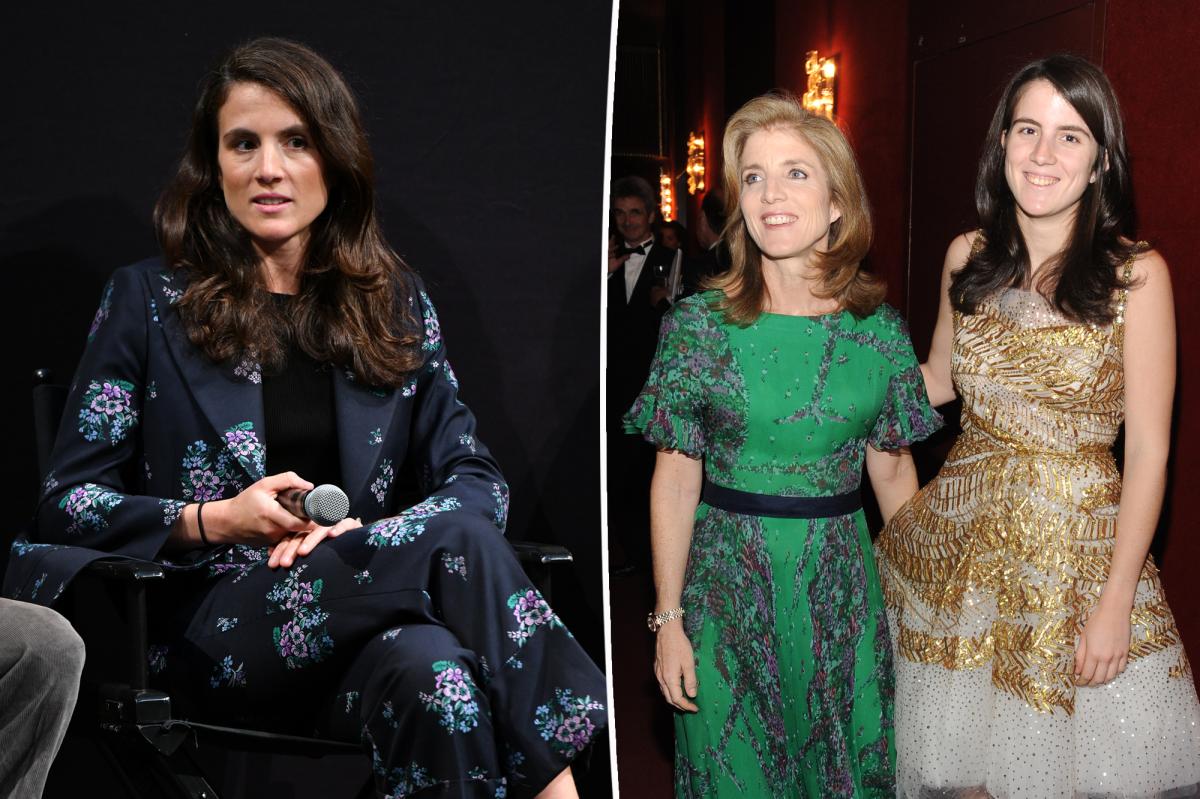
Caroline Kennedy’s daughter Tatiana Schlossberg has revealed that she has been diagnosed with acute myeloid leukemia and has been given a year to live by doctors.
In an essay published in The New Yorker on Saturday, Schlossberg, 35, said doctors discovered the disease after giving birth to her second child in May 2024.
“A few hours later, my doctor noticed something was wrong with my blood cell count. A normal white blood cell count is about 4 to 11,000 per microliter. Mine was 131,000 per microliter,” she wrote.
“It could simply be pregnancy and childbirth related, or it could be leukemia,” doctors recalled, adding that doctors eventually diagnosed her with “a rare mutation called inversion 3.”
Regarding treatment options, Schlossberg said, “Standard treatments are not curable.” Doctors recommended that she undergo several months of chemotherapy and a bone marrow transplant.
“I couldn’t believe they were talking about me. I couldn’t believe it. I swam a mile in the pool the day before, nine months pregnant. I wasn’t sick. I didn’t feel sick. In fact, I was one of the healthiest people I knew.”
Schlossberg, who has a 3-year-old son and a 1-year-old daughter with her husband George Moran, added: “I had a son that I loved more than anything and a newborn baby that needed to be taken care of.”
Schlossberg said after giving birth to her daughter, she spent five weeks at Columbia Presbyterian Hospital and was then transferred to Memorial Sloan Kettering for a bone marrow transplant. For chemotherapy, she began treatment at home.
After months of treatment, she entered a clinical trial for CAR T-cell therapy, a type of immunotherapy, for certain blood cancers in January. However, her doctors eventually told her that her prognosis was worsening.
“George did everything he could for me,” Schlossberg said of her husband, whom she married in 2017. “He talked to all the doctors and insurance people I didn’t want to talk to, and he slept on hospital floors.”
“My parents and my brother and sister have also been raising my children in my various hospital rooms almost every day for the past year and a half,” Schlossberg continued.
“While I was suffering, they held my hand without flinching and tried not to show their pain or sadness to protect me. This was a great gift, even though I feel their pain every day.”
“Mostly, I try to live with them now. But being present is harder than I thought, so I let the memories come and go,” she concluded.
